My husband David and I had been planning our retirement for years. Long walks without checking the time. A proper vegetable garden. Relaxed Sunday mornings. And above all: to be the grandparents we had always dreamed of being for our three grandchildren.
The sciatica started three months after I left the NHS trust where I had worked for two decades
At first it was just a muscle spasm—a dull, persistent pulling sensation across my left lower back. I recognised it immediately. I'd seen it in hundreds of patients. I told myself: It'll go away.
It didn't subside.
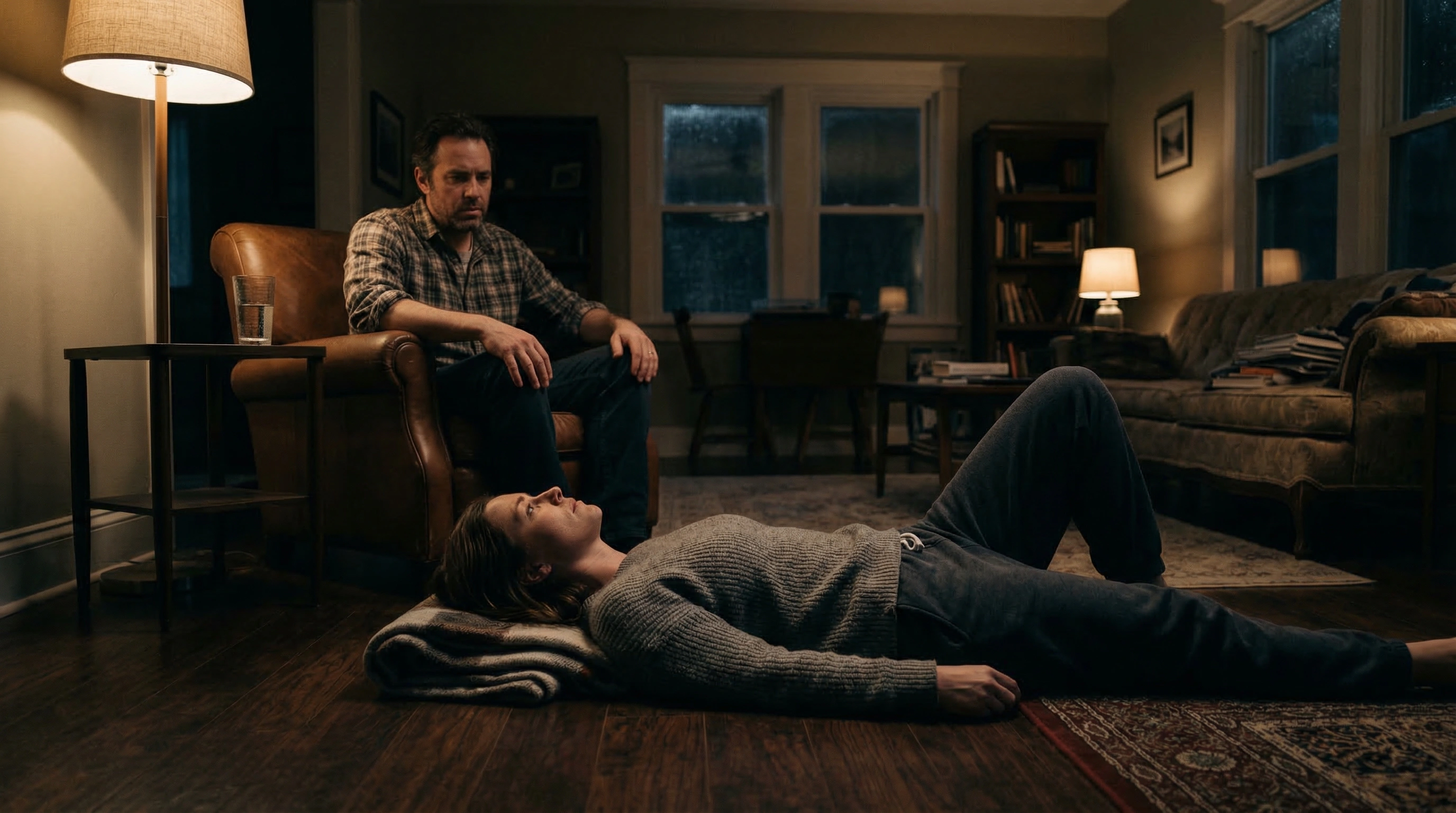
Within six weeks, the pain had taken on a quality for which no clinical term truly suffices. A burning, electric current that began in my lumbar spine, radiated through my left hip, down the back of my thigh, and into my calf. The precise anatomical course of the sciatic nerve—the longest nerve in the human body, extending from the lumbar vertebrae to the feet. I had always referred to it as "nerve pain" with my patients. Lying on my own bedroom floor at night, I realised for the first time just how inadequate those two words are.
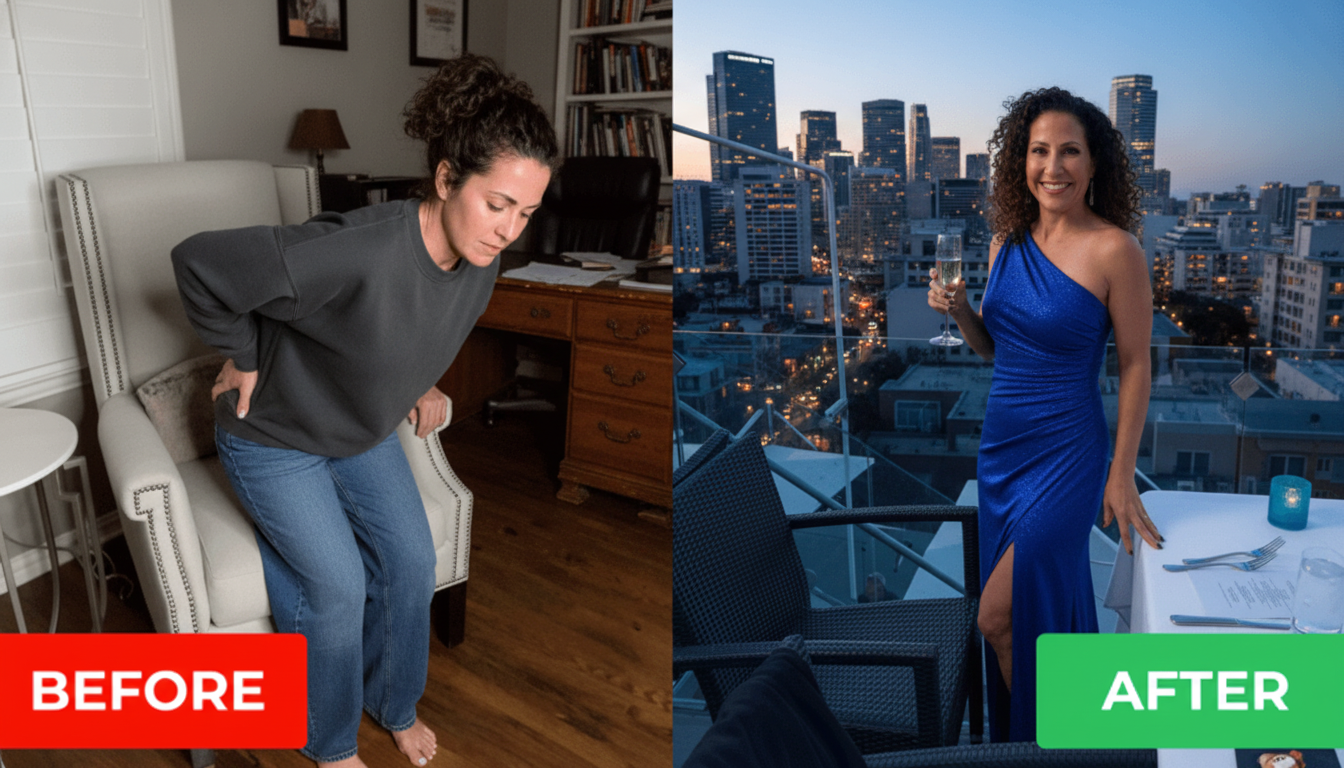
Some mornings were so bad that I couldn't get out of bed without groaning. I would sit on the edge of the bed, my hands on the frame, and rock slowly back and forth to gather enough momentum to push myself up.
"My granddaughter Emma saw it one morning. She was four years old. She looked at me with these big, serious eyes and asked: 'Grandma — are you broken?'"
I told her, "No, honey. Grandma's just a little stiff."
But later that night, when David was asleep, I stood in the kitchen and cried for twenty minutes. Because the honest answer—the one I couldn't give a child—was, "I honestly don't know myself."